
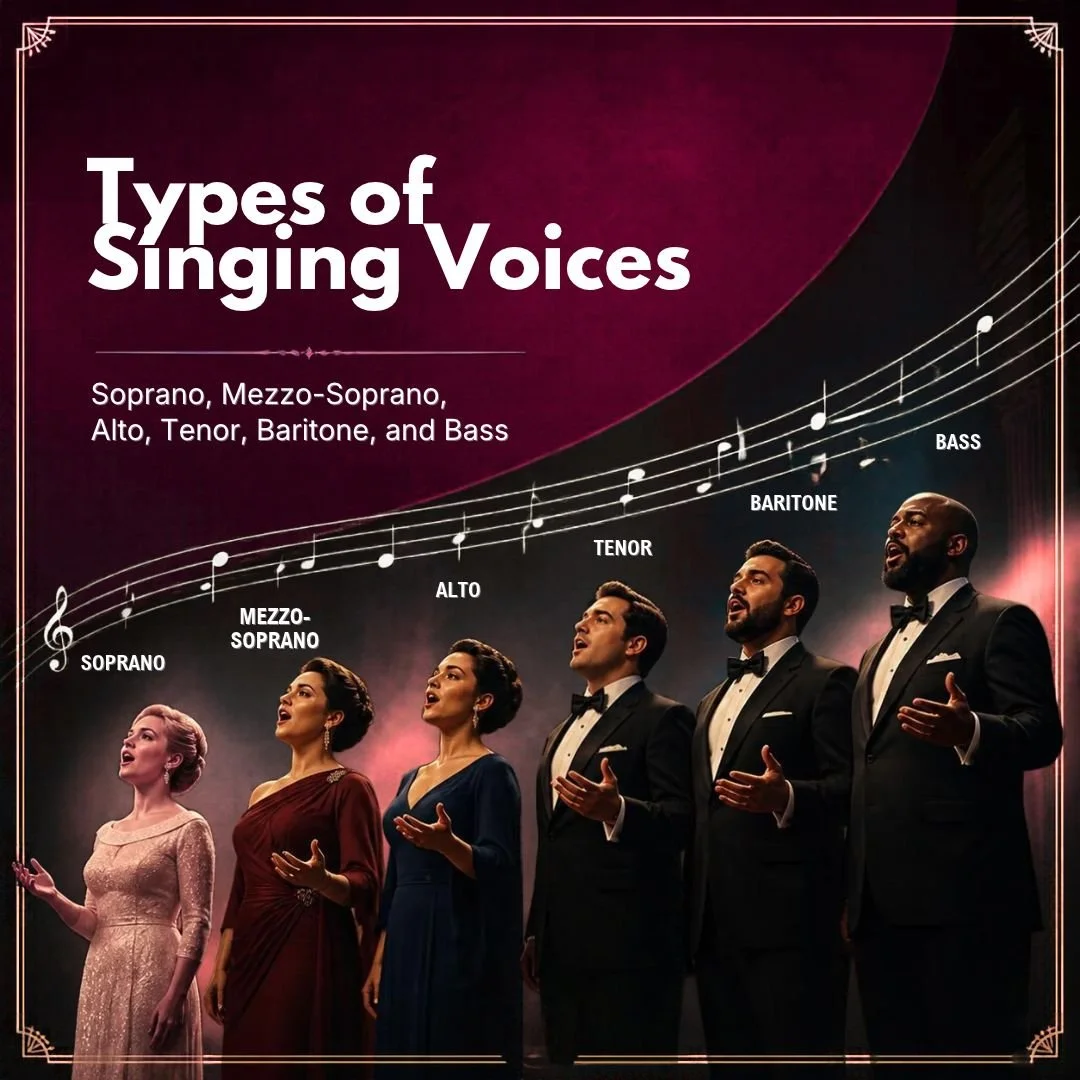
Types of Singing Voices: Soprano, Mezzo-Soprano, Alto, Tenor, Baritone, and Bass
Click the image for more details about our NUVO’s voice lessons in Surrey, White Rock, Langley, Delta BC, Calgary, Saskatoon and Regina SK.
Have you ever wondered why some singers can effortlessly reach high notes while others have rich, deep voices? Every singer has a unique vocal quality, range, and tone. Understanding the different types of singing voices can help you discover your strengths and choose songs that suit your voice.
Whether you are a beginner, a student exploring music, or an experienced singer looking to improve your technique, learning about voice types is a great starting point.
What Are the Different Types of Singing Voices?
In classical singing, voices are commonly grouped into six main categories: soprano, mezzo-soprano, contralto (often called alto), tenor, baritone, and bass. These categories are based on factors such as vocal range, tone, and where the voice feels most comfortable.
1. Soprano
Soprano is the highest standard female voice classification in classical singing. Sopranos often sing bright, high melodies and may perform roles that require agility, clarity, and sustained high notes.
Soprano voices are common in opera, musical theatre, choral music, and contemporary singing.
Interested in developing your soprano voice? NUVO Music School offers vocal lessons to help singers build their technique, confidence, and vocal range. Meet Yumeka Hildreth for online vocal lessons, or Emma Johnson for in-home vocal lessons in Saskatoon and Regina, Saskatchewan.
Whether you're a beginner or looking to strengthen your high notes, personalized vocal instruction can help you work toward your singing goals.
2. Mezzo-Soprano
Mezzo-soprano voices generally sit between soprano and contralto. They often have a warm, rich quality and a comfortable middle range, although some mezzo-sopranos can sing very high notes.
This voice type is versatile and can suit classical repertoire, musical theatre, pop, and many other styles.
3. Contralto or Alto
Contralto is the lowest standard female classical voice type. Contralto singers often have a deep, warm, and resonant sound.
In choirs, the word alto commonly refers to a vocal part rather than a precise individual voice classification. Alto parts typically sit below soprano parts.
4. Tenor
Tenor is generally the highest standard male voice classification. Tenors often sing prominent melodies and can perform music that requires a strong, expressive upper range.
Tenor voices appear in opera, musical theatre, pop, and choral music.
5. Baritone
Baritone voices fall between tenor and bass. They often have a full, warm, and flexible sound, making them suitable for a wide variety of musical styles.
Baritone is a common male classical voice classification and frequently appears in opera, musical theatre, and contemporary music.
6. Bass
Bass is the lowest standard male classical voice classification. Bass singers are known for their deep, resonant sounds and ability to sing low notes comfortably.
Their voices can add depth to choral harmonies and are often featured in classical and theatrical music.
How Do You Know Your Singing Voice Type?
Your highest note alone does not determine your voice type. A singing teacher may consider several factors, including:
Comfortable vocal range: The notes you can sing comfortably and consistently.
Tessitura: The part of your range where singing feels most natural over time.
Tone and vocal quality: The natural character of your voice.
Vocal transitions: How smoothly your voice moves between different registers.
Training and experience: Your technique can influence the notes you can sing comfortably.
You do not need to fit neatly into a category when you first begin singing. Your voice may develop as you gain experience and learn healthy vocal techniques.
Can Singing Lessons Help You Discover Your Voice?
Absolutely. Structured vocal lessons can help you explore your range, develop breath coordination, improve pitch accuracy, and learn how to sing with greater confidence.
A vocal teacher can also help you select suitable songs, understand your vocal strengths, and work toward your musical goals without forcing your voice into an unsuitable range.
At NUVO Music School, students can explore vocal lessons with instruction suited to their experience and goals. Whether you are learning to sing for fun, preparing for a performance, or hoping to strengthen your technique, guided instruction can help you build a strong foundation.
Discover Your Singing Voice with NUVO Music School
Every voice is different, and discovering your vocal strengths can be an exciting part of your musical journey.
Interested in learning more about soprano voices and their vocal ranges? Read our guide to Soprano Vocal Range: Notes, Types, and How to Develop Your High Notes.
Ready to explore your voice? Visit our page to learn more about NUVO Music School's singing instruction.