

If you're thinking about learning drums, one of the first questions you'll face is whether to start on an electric kit or a traditional acoustic one. As a teacher, I get asked this all the time, and the honest answer is that both are great. They just suit different players, homes, and goals. Here's how they compare.
Sound and Volume
This is the biggest difference. An acoustic kit is loud, often well over 100 decibels in a small room. That's part of the thrill, but it can be a problem for neighbors, family members, and anyone sharing a wall with you.
Electric drums are a different story. The pads are quiet, and you hear the sound through headphones or a small amp. For students in apartments, shared houses, or homes with young kids, this alone can decide the question. Practice happens at 7 a.m. or 10 p.m. without a single complaint.
Feel and Response
Acoustic drums respond naturally to how you hit them. Dynamics, rebound, and tone all come from the real drumhead and the shell, and that feedback is hard to fake.
Modern electric kits have come a long way. Mesh heads feel close to a real drumhead, and good modules pick up soft ghost notes and hard accents accurately. They still don't feel identical, and the rebound and cymbal feel can differ, but for a beginner the difference is small. Skills transfer well in both directions.
Variety of Sounds
This is where electric kits shine. With a push of a button, you can switch from a jazz kit to a rock kit to an electronic set. Many modules include built-in songs, click tracks, and coaching features, which is great for building steady timing. Some let you plug in your phone and play along with your favorite songs.
An acoustic kit gives you one authentic sound, which you shape through tuning, heads, and playing technique.
Space and Portability
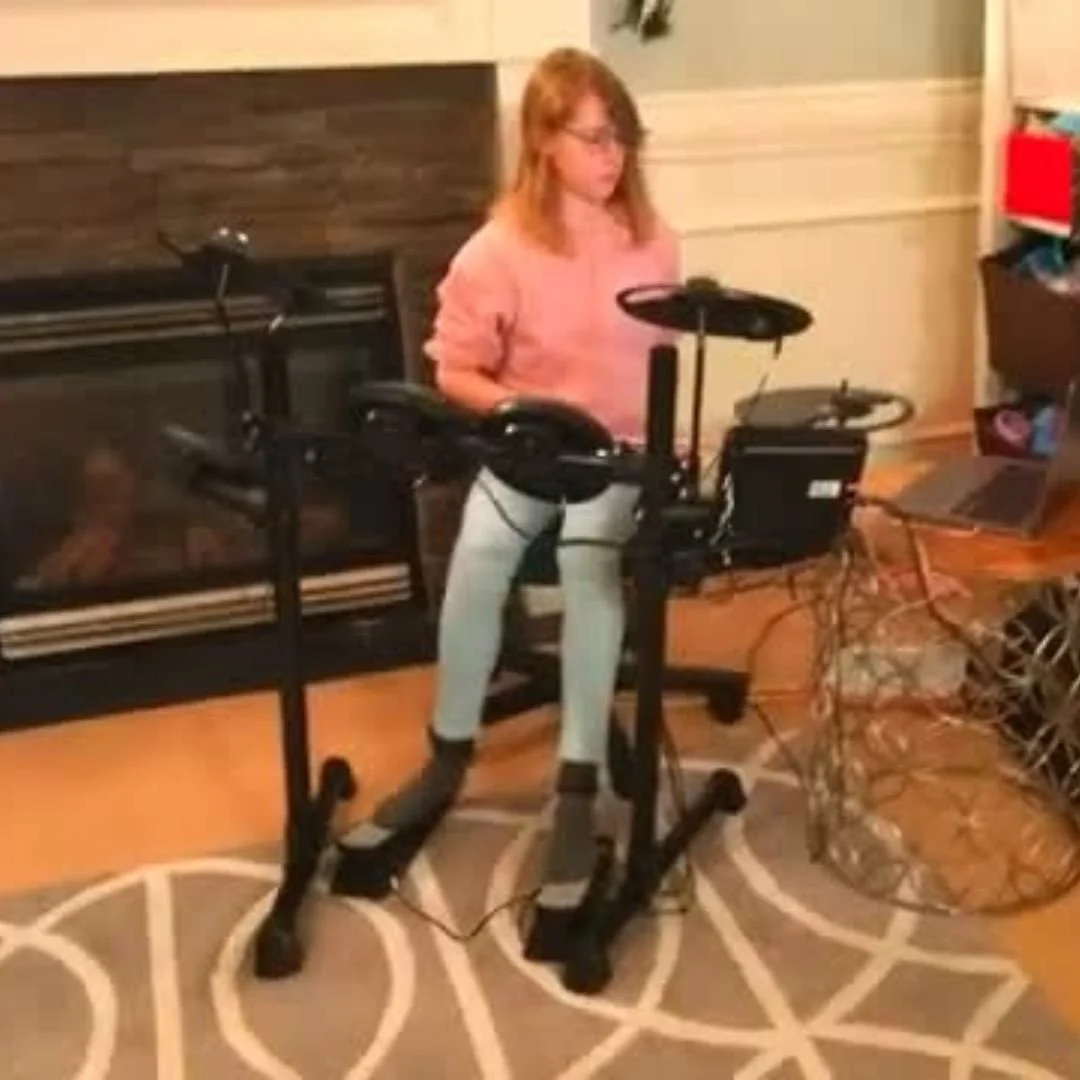
Electric Drum Lessons in Langley BC with NUVO Music School
A full acoustic kit takes up a lot of room and is awkward to move. Electric kits are usually more compact, lighter, and easier to set up in a bedroom or corner of a living room. Many fold down, which helps if you move often.
Cost and Maintenance
Both options span a wide price range, and a good beginner kit of either type is a real investment. Acoustic kits need tuning, head replacements, and often better cymbals to sound good. Electric kits need little upkeep, but they depend on electronics, so quality varies, and repairs can be harder.
One extra consideration: electric kits often have recording features or USB/MIDI outputs, making it simple to record your practice or lay down tracks at home.
Which Is Better for Learning?
Here's my take as a teacher. The best drum kit for a student is the one they'll actually play every day. If an electric kit means more practice because it's quiet and convenient, that's the better choice. If a student is passionate about the raw sound and has the space, an acoustic kit is incredibly rewarding.
Some things I recommend either way:
Learn proper technique, grip, and posture from day one.
Practice with a metronome, which electric kits make easy.
If you start on electric, try an acoustic kit occasionally at lessons or a friend's place so you get used to the feel.
If you plan to play live in a band, you'll want time on acoustic drums eventually.
The Bottom Line
| Electric Drums | Acoustic Drums | |
|---|---|---|
| Volume | Quiet, headphone-friendly | Very loud |
| Feel | Close, but not identical | Natural and authentic |
| Sounds | Many kits and effects | One real kit sound |
| Space | Compact | Large |
| Maintenance | Low | Tuning and head changes |
| Best for | Apartments, practice, beginners | Live playing, traditional sound |
There's no wrong answer. Plenty of great drummers started on a practice pad, a pillow, or a set of pots and pans. What matters is that you start, stay curious, and enjoy it.
Ready to find out which kit fits you? Book a trial lesson and let's get you behind the drums.