
Kids Get Bored in Music Lessons (And How to Fix It)
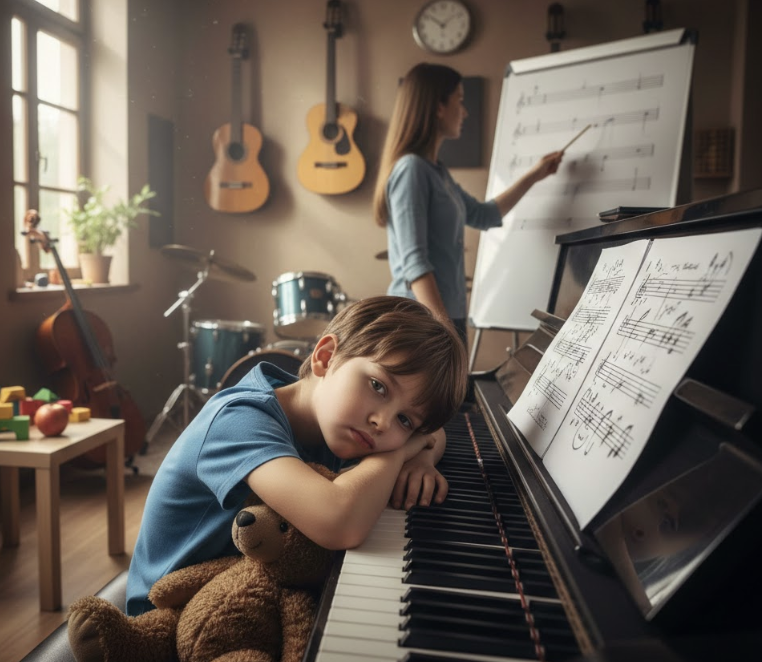
If you’ve ever heard your child say, “I’m bored with my music lessons,” you’re not alone. For many parents, this moment brings frustration, worry, and even guilt. You start to wonder: Is music just not for my child?
The truth is, the problem usually isn’t the child; it’s the lesson format.
Boredom Isn’t a Lack of Talent
Children are naturally curious. They love to explore, move, and create. When music lessons feel rigid, repetitive, or disconnected from how a child learns, boredom can set in quickly, even for talented students.
A one-size-fits-all approach may work for some, but for many children, it does the opposite:
They lose interest
They disengage
They stop enjoying music altogether
And that’s the last thing we want.
Every Child Learns Differently
Some children learn best by listening, others by moving, seeing, or experimenting. A child who gets bored easily often isn’t unmotivated; they simply need a learning style that matches who they are.
That’s why flexibility matters.
Music Should Be Something Your Child Looks Forward To
When lessons are engaging and personalized, something changes:
Practice feels less like a chore
Confidence grows
Progress feels natural
Music becomes joyful again
If your child gets bored quickly during music lessons, it doesn’t mean they lack focus, discipline, or talent. In most cases, it means the lesson structure doesn’t match how their brain learns.
Here are proven, practical ways to help children stay engaged and motivated in music lessons.
1. Match the Instrument to the Child’s Personality
Not every child thrives on the same instrument.
When a child feels naturally drawn to their instrument, engagement increases immediately.
2. Keep Lessons Short and Focused
For young children, shorter lessons with clear goals are far more effective than long sessions.
30 minutes of focused learning
Clear mini-goals per lesson
Regular breaks when needed
Long lessons without variation often lead to zoning out, not progress.
3. Use Variety Within One Lesson
Boredom usually comes from repetition, not difficulty.
A well-balanced lesson includes:
Playing
Listening
Movement (clapping, tapping, rhythm games)
Visual learning (colours, patterns, note placement)
Changing activities every few minutes keeps the brain alert and curious.
4. Let Children Make Small Choices
Giving children controlled choices builds ownership and motivation.
Examples:
“Do you want to start with your favorite song or your new piece?”
“Piano or rhythm game first?”
Even small decisions help children feel involved instead of controlled.
5. Focus on Progress, Not Perfection
Children lose interest when lessons feel like constant correction.
Celebrate:
Small improvements
Effort, not just accuracy
Trying again after mistakes
Confidence keeps boredom away.
6. Connect Music to Real Life
Music becomes exciting when children see why it matters.
Let them perform for the family
Play songs they recognize
Show how music is used in movies, games, or church
When music feels meaningful, motivation follows.
7. Choose Teachers Who Adapt, Not Just Instruct
A great teacher doesn’t just follow a book — they observe, adjust, and respond.
At NUVO Music School, lessons are tailored to:
Learning style
Age and attention span
Personality and interests
This flexibility is often the key difference between boredom and enthusiasm.
Final Thought for Parents
If your child gets bored easily, it’s not a failure it’s feedback.
With the right approach, music lessons can become something your child looks forward to, rather than something they avoid.